

Are Polarised Sunglasses Best for Driving After the Beach?
Last Updated: November 5, 2026
Quick Summary
Polarised sunglasses with UV400 protection are a strong choice for driving after the beach on bright coastal roads, because they cut the horizontal glare off water and wet surfaces. Test them against your dashboard screens first, since they can make some displays hard to read.
- Look for a UV400 rating, which blocks ultraviolet light up to 400 nanometres.
- Polarised lenses cut the horizontal glare bouncing off water, sand and wet roads.
- Run a dashboard test in the car, tilting your head to check each screen stays readable.
- Avoid very dark lenses for shaded roads, tunnels and dusk driving.
- Grey and green medium tints suit most bright conditions for the drive home.
Table of Contents
- Why Driving After the Beach Strains Your Eyes
- UV400 Sunglasses vs Polarised Lenses: What Each Actually Does
- Polarised Sunglasses for Driving: Benefits and Limits
- Best Lens Colour for Driving After the Beach
- Our Picks: Best Sunglasses for Driving After the Beach
- Choosing Sunglasses for Beach and Driving
- Your Next Step: Choosing a Pair for Your Drive Home
- Frequently Asked Questions
Driving home from the beach is one of the harder moments for your eyes. The sun bouncing off the water and pale sand floods your vision, and then you move into a shaded road or a tunnel and the light drops away almost instantly. This guide helps you pick sunglasses that cope with that swing, and explains what UV400 and polarised lenses actually do.
Why Driving After the Beach Strains Your Eyes
Bright coastal light is intense, and it reaches your eyes from several directions at once. Sea glare, sunlit sand and white car park surfaces all throw light up toward your face. Keeping your eyes comfortable and your view clear takes more than a dark tint.
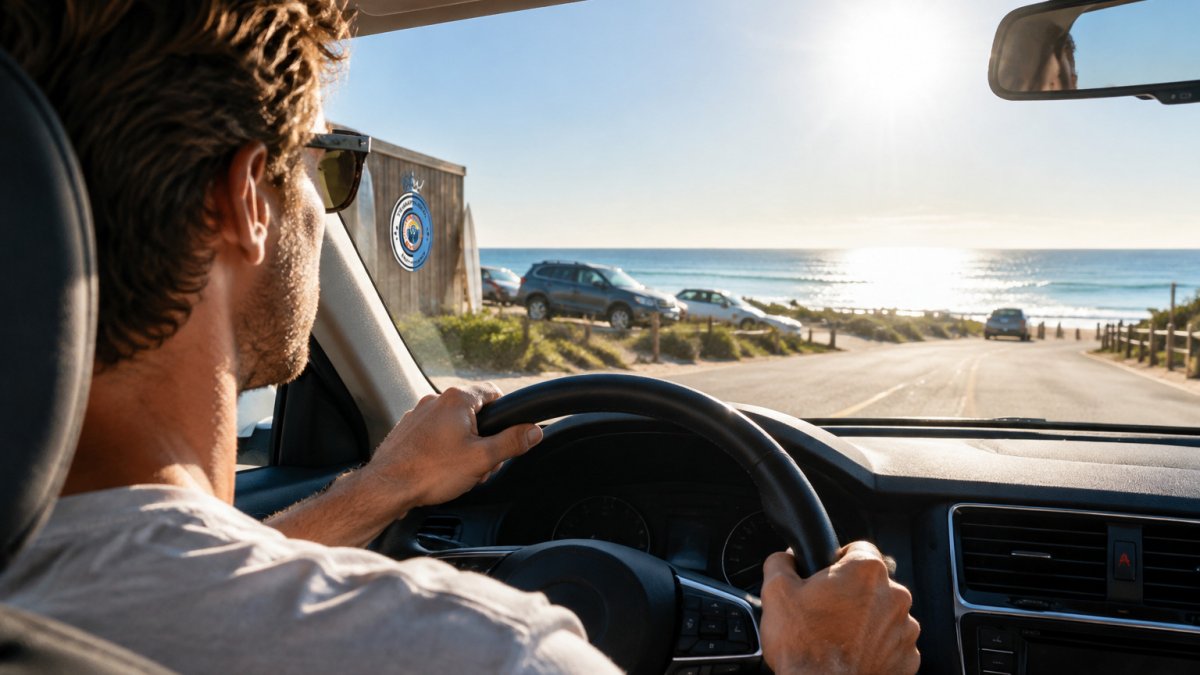
How sea glare and sunlit sand affect your vision
Water and flat, pale surfaces reflect a lot of horizontal light. That reflected glare is what makes the road ahead look washed out and forces you to squint. This glare can be at its worst in the late afternoon, when the sun sits low over the water.
!A driver in sunglasses behind the wheel of a car leaving a coastal car park, bright sunlight on the road ahead
Adjusting from bright beach light to shaded roads and tunnels
The harder challenge comes when you leave the beach. Your eyes need time to adjust from bright light to shade, and a very dark lens can make that adjustment feel slower. Lenses that are too dark for the shade can leave the road looking murky, which is a real safety concern on the way home.
UV400 Sunglasses vs Polarised Lenses: What Each Actually Does
These two terms are often confused, and they do different jobs. UV400 describes protection from ultraviolet light. Polarisation describes how a lens handles reflected glare. A pair can have one, both or neither.
UV400 lenses block ultraviolet light up to 400 nanometres, which covers both UVA and UVB. Look for this rating on the product, and buy from a seller who states it clearly. Polarised lenses use a filter that cuts the horizontal glare bouncing off water and wet roads. That makes them useful on the road, but they can also make some digital dashboard screens and phone displays harder to read at certain angles.
UV400 is the baseline to look for, and polarisation is a comfort and glare feature you choose based on how you drive. Use this checklist for verifying UV protection before buying online to confirm the rating.
Polarised Sunglasses for Driving: Benefits and Limits
Polarised lenses are popular with drivers for good reason. They reduce the sharp reflection off wet bitumen and water, which makes the road easier to read. But the same filter that kills glare also interacts with the screens inside your car, and that interaction is where most buying decisions go wrong.
How polarisation actually cuts glare
A polarised lens contains a chemical film that only lets light vibrating in one plane pass through. Horizontal glare, the kind bouncing off water, wet sand and the bonnet of the car ahead, is blocked, while vertical light is largely transmitted. That is why polarised lenses feel so effective on a bright coastal road: they are physically removing the dominant glare direction rather than simply darkening everything.
The digital dashboard problem
Most car infotainment displays, digital instrument clusters and phone screens emit polarised light, usually at a different angle to your lenses. When the two polarisation axes cross, the screen can appear black, washed out, or striped with rainbow bands.
Before you commit to a pair, do a dashboard test. Sit in the driver's seat with the sunglasses on and look at every screen you rely on, speedometer, navigation, reversing camera, head-up display if fitted. Then tilt your head slightly left and right, as you would when checking a blind spot, and confirm the screens stay legible.
Watch out: a pair that looks perfect in the shop under fluorescent light can behave completely differently against an LCD dashboard, so test in the car if the retailer allows it.
Other limits worth knowing
- Low light and tunnels: A heavily polarised, dark lens is a poor choice for dusk, shaded car parks or tunnels, because it removes light you cannot spare.
- Wet-road reflections at night: Polarisation helps with daytime wet-road glare but is not a substitute for night-driving lenses, which should be clear or very lightly tinted.
- Ice and black ice: Polarisation can make some icy patches harder to spot, though this is less of an issue on coastal roads.
- Prescription wearers: If you need prescription lenses, ask the optometrist to confirm the polarisation axis relative to your frame and your car's screens, because a prescription polarised lens cannot simply be rotated after manufacture.
Polarised lenses are a strong choice for daytime coastal driving. They are not a universal answer for every driving condition, and the dashboard test is the single most useful check you can do before buying.
The table below sums up the main limits of polarised lenses for driving, drawn from the points covered in this section.
| Situation | Why it matters | What to do |
|---|---|---|
| Digital dashboard screens | Polarised light can make screens go black or striped | Run the dashboard test in the car |
| Head tilted to check blind spot | Screen may black out at certain angles | Tilt your head left and right during the test |
| Dusk or shaded car parks | Dark polarised lenses remove light you need | Choose a lighter or non-polarised lens |
| Tunnels | Heavy tint slows adjustment from bright light | Avoid very dark polarised lenses |
| Night wet-road glare | Polarisation targets daytime glare only | Use clear or lightly tinted night lenses |
| Prescription wearers | Polarisation axis cannot be rotated after manufacture | Ask the optometrist to confirm the axis |
Best Lens Colour for Driving After the Beach
Lens colour changes how the world looks, so it matters for driving. The beach-to-road transition also means your eyes have to adapt from very bright coastal light to shade, tunnels and tree cover within seconds, and the tint you choose affects how hard that adaptation is.
Tint categories and light transmission
Sunglass lenses are grouped by how much visible light they let through. Category 2 lenses transmit roughly 18-43 per cent of light and suit overcast or mixed conditions. Category 3 lenses transmit roughly 8-18 per cent and are the standard choice for bright sun. Category 4 lenses transmit 3-8 per cent and are intended for extreme glare such as high-altitude snow or open water, they are not suitable for driving because they are too dark for road use.
Colour by condition
- Grey: The most neutral tint. It reduces overall brightness without shifting colours, which makes it a safe all-rounder for bright coastal roads and mixed light.
- Brown and amber: Add contrast by filtering blue light. They can sharpen the view on hazy or overcast days and are popular with drivers who want definition on flat, featureless roads.
- Green: A balanced middle ground. It preserves colour perception reasonably well while cutting glare, and is a common choice for general driving.
- Yellow and rose: Useful in low light or fog but too light for full beach sun. They are not a substitute for a Category 3 lens on a bright coastal drive.
The beach-to-tunnel transition
The hardest moment is not the beach itself, it is the shaded road, the tunnel or the underground car park you meet on the way home. A very dark Category 3 lens in a strong colour can leave the road murky for the first few seconds after you leave bright light, and that is when your eyes are slowest to adapt. A medium tint with good UV400 protection, or a photochromic lens that lightens in shade, may reduce that adjustment lag.
Watch out: photochromic lenses react to UV, and car windscreens block most UV, so a photochromic lens may not darken fully behind the wheel, check this before relying on it for beach-to-road driving.
What to avoid
Avoid very dark or mirrored lenses if you drive through shaded areas or tunnels after the beach. Mirrored coatings reflect light rather than absorbing it, and while they look striking on the sand, they can reduce the clarity you need when light drops. For most people, a medium Category 3 tint in grey or green with UV400 protection is the safest all-round option for the drive home.
Our Picks: Best Sunglasses for Driving After the Beach
The options below are examples of sunglasses often considered for beach-to-road driving. Check the current specifications and stock on each brand's website before you buy.
Costa del Mar Rinconcito
Square-frame sunglasses are a common style for drivers who want coverage around the eyes. Verify the lens specifications and price with the brand before buying.
Ray-Ban Clubmaster and New Wayfarer
Confirm Australian stock, lens options and pricing directly with the retailer.
Knockaround Premiums Sport and Serengeti Drivers Gold
Polarisation and UV specifications for these models should be checked on each product page before you buy.
Choosing Sunglasses for Beach and Driving
Start with the UV400 rating, because that is non-negotiable. Then decide whether polarisation suits your driving. If you spend most of your time on sunny coastal roads, polarised lenses are a strong option. If you also drive through tunnels, dusk or areas with many digital dashboards, a lighter tint or non-polarised lens may serve you better.
Fit matters too. Sunglasses that sit close to the face and wrap slightly at the sides block more glare from the edges. Try a pair on if you can, and check that you can see the dashboard clearly while wearing them. You can browse oversized UV-protective square frames in a range of colours to compare options for beach and driving.
Your Next Step: Choosing a Pair for Your Drive Home
Choose a pair with UV400 protection, a tint that suits your usual light conditions, and a frame that fits well. Shop The Shacktique's UV400 sunglasses range to find a pair that fits your beach days and your drive home.
Frequently Asked Questions
Are polarised sunglasses better for driving after the beach? For most daytime coastal driving, polarised lenses reduce the glare off water and wet roads, which makes the road easier to read.
Do I need UV400 sunglasses for driving? UV400 protection blocks ultraviolet light up to 400 nanometres. It is a sensible baseline for any sunglasses you wear outdoors, including on the road.
What lens colour is best for driving after the beach? Grey and green tints suit most bright conditions, while brown and amber can add contrast. Avoid very dark lenses if you also drive in shade.
Frequently Asked Questions
Are polarised sunglasses better for driving?
For most drivers, yes. Polarised lenses filter horizontal glare off wet roads, bonnets and water, which is the kind of light that causes squinting and fatigue after a beach day. They do not improve visibility on their own, and they can make some LCD dashboard screens and phone displays harder to read at certain angles. Test a pair by tilting your head while looking at your car's screen before you commit to them.
Do UV400 sunglasses protect your eyes while driving?
UV400 means the lenses block ultraviolet light up to 400 nanometres, covering both UVA and UVB. That protects your eyes from sun exposure, but it does not reduce glare or change how bright the road looks. Look for UV400 or 100% UV protection on the label. UV protection and polarisation are separate features, and a pair can have one without the other.
Can you drive safely in very dark sunglasses?
Very dark lenses can reduce the light reaching your eyes enough to make shaded roads, tunnels and dusk harder to see. Moderate tints suit bright beach days, while very dark tints are better kept for open sun. Once you are back in the car and the light drops, swap to a lighter lens or remove the sunglasses entirely. Avoid driving in dark lenses at night.
What should I look for in sunglasses for driving after the beach?
Start with UV400 protection and polarised lenses, then choose a lens colour that balances glare reduction with clear vision in shade. Frames should sit close to your face without pressing on your temples, and the lenses should cover your peripheral vision. Check that the pair stays comfortable for long periods, since you will likely wear them while the sun is still bright on the drive home.
