

Buy Waterproof Slides for Pool Use: What to Look For
Last Updated: November 4, 2026
Quick Summary
The best waterproof slides for pool use have a closed-cell EVA or moulded rubber footbed that dries quickly, a deep-channel textured sole for grip on wet tiles, and a flexible strap that resists chlorine. Avoid porous textile uppers, which hold water and chlorine residue.
- Closed-cell EVA foam stops water ingress and dries in minutes.
- Moulded TPR or rubber grips better and resists abrasion, but dries slower.
- A textured sole with deep lateral channels pushes water out and prevents slips.
- Avoid textile uppers unless the lining is quick-dry synthetic mesh.
- Test the strap fit with wet feet, because a snug dry fit can loosen when wet.
Table of Contents
- What Makes a Waterproof Slide Work in the Pool
- Comfortable Slides for All Day Wear
- Booking Your Pair from The Shacktique
- Frequently Asked Questions
Buy waterproof slides for pool use and you'll want a pair that stays grippy when wet, dries fast and doesn't fall apart after a summer of chlorine. At The Shacktique, here's what to look for before you buy.
Waterproof slides for pool use should keep their grip on wet tiles, shed water quickly and hold their shape. Grip matters more than looks on wet surfaces.
What Makes a Waterproof Slide Work in the Pool
A waterproof slide earns its keep through the footbed material, the outsole tread pattern and the upper's chemical resistance. Get any one wrong and the slide soaks up water, loses grip or stiffens after weeks of chlorine exposure.
Footbed materials and how they age in chlorine
- Closed-cell EVA foam, sealed cells stop water ingress so it dries in minutes; higher-density, UV-stabilised grades hold shape longer.
- Moulded synthetic rubber or TPR, heavier and grippier than EVA, with better abrasion resistance; resists chlorine but dries slower.
- PVC, cheap and fully waterproof, but rigid PVC cracks at flex points and soft PVC can leach plasticiser.
- Textile uppers and linings, porous fabrics hold water and chlorine residue; avoid unless the lining is quick-dry synthetic mesh.
Tread and traction
Grip on wet tiles comes from the rubber compound and the channel design. A textured sole with deep lateral channels pushes water out from under the foot, preventing hydroplaning on smooth pool decking; smooth or shallow soles are the biggest cause of slips.
Upper and strap construction
A strap that stays flexible in chlorinated water outlasts one that stiffens or cracks.
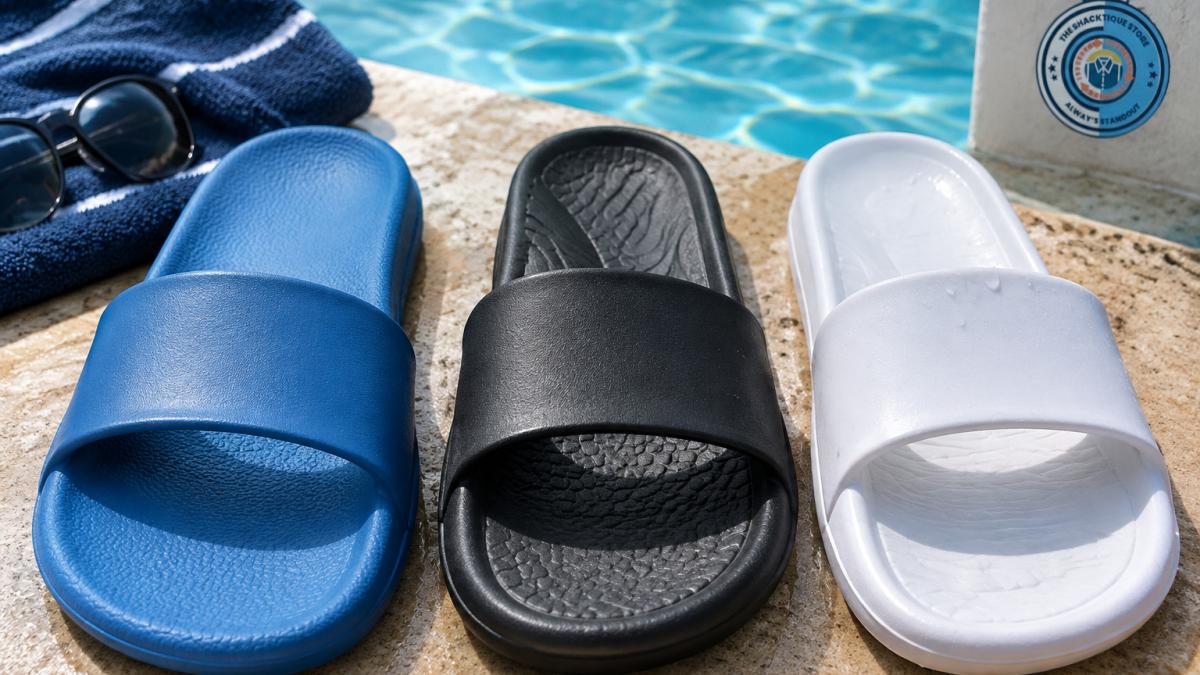
The article compares the main footbed materials and how each handles water and chlorine.
| Material | How it handles water and chlorine | Key difference |
|---|---|---|
| Closed-cell EVA foam | Sealed cells stop water ingress; dries in minutes | Higher-density, UV-stabilised grades hold shape longer |
| Moulded TPR or rubber | Resists chlorine; dries slower | Heavier and grippier, better abrasion resistance |
| PVC | Fully waterproof | Rigid PVC cracks; soft PVC can leach plasticiser |
| Textile uppers and linings | Porous; holds water and chlorine residue | Avoid unless lining is quick-dry synthetic mesh |
Comfortable Slides for All Day Wear
Comfort around a pool is a fit-and-support question: a slide comfortable for ten minutes on carpet can rub or cramp after two hours on wet concrete.
Fit and sizing
Pool slides are usually worn barefoot, so fit matters more than with socks. A slide should hold the foot without the toes gripping to keep it on, roughly a finger's width at the heel and no toe overhang. If between sizes, size up, and check the size chart against measured length, not your usual shoe size.
Footbed contour and support
A contoured footbed with a raised arch and slight heel cup distributes pressure better over hours than a flat foam sheet. A slightly firmer, dual-density footbed holds up better than a very soft one, which compresses and loses shape. If you have flat feet or plantar issues, prioritise arch contour over cushioning depth.
Strap security and adjustability
A secure strap keeps the slide on when the foot is wet and the sole slick. Adjustable hook-and-loop or buckle straps let you tighten the fit through the day; fixed single-piece straps are more durable but less forgiving of odd foot shapes.
Traction and safety around the pool
A slide that slips forces you to tense your foot, which is tiring and unsafe. Pair a deep-channel outsole with a footbed that doesn't become slick when wet. For households with children or older adults, prioritise grip and strap security over cushioning.
Matching the slide to the pool type
A domestic plunge pool or spa deck is usually smooth tile or concrete, so a non-marking rubber outsole with fine channels works well. A larger pool with rougher aggregate surround benefits from a more abrasion-resistant TPR or rubber outsole. For beach use, choose a material that resists salt as well as chlorine and rinse in fresh water after each use.
Our pick for all-day comfort is the Cloud Comfort Slides, which are ultra-lightweight with a non-slip waterproof sole.
For more help choosing, read our guide on how to choose comfortable slides for all day wear, or browse the Thick Platform Cloud Slippers for a chunkier, cushioned option.
Watch out: a slide that feels snug and secure dry can become loose the moment it is wet, so test the strap fit with wet feet before committing to a pair for pool use.
Booking Your Pair from The Shacktique
The Shacktique stocks coastal-inspired slides and accessories built for the pool and beach. Free shipping applies on orders over $75 AUD.
Check the product details for material and sole type before ordering, and get in touch via our Contact Us page if you need help choosing a size. Start with our range of comfortable slides and find the pair that suits your next day by the water.
Frequently Asked Questions
What materials are best for waterproof pool slides?
EVA foam and injected PCU are the materials most commonly used for waterproof pool slides, and both dry quickly and resist water absorption. EVA is very lightweight and cushioned, which suits all-day wear, while PCU tends to hold its shape and durability better over time. Check the product description for the material before buying, and look for a textured footbed that keeps grip when wet. Pricing varies by style and retailer, so check current prices on The Shacktique website before you buy.
How do I clean rubber pool slides to prevent mould?
Rinse your slides in fresh water after every swim to remove chlorine and salt, then wash them by hand with mild soap and a soft brush. Make sure they dry fully in open air before storing them in a bag or cupboard, since trapped moisture is what encourages mould. Avoid harsh chemicals that can break down the surface. Regular rinsing takes only a minute and extends the life of the slide noticeably.
Are EVA foam slides better for the pool than rubber?
EVA foam slides are lighter and dry faster than most rubber options, which makes them a practical choice for poolside wear. Rubber outsoles usually offer stronger traction on wet tiles, so a hybrid design with a rubber sole and foam upper can give you the best of both. The right choice depends on whether you prioritise lightness and comfort or grip on slippery surfaces. Compare the outsole and footbed details for each pair you consider.
