

Why Quick Dry Beach Clothing Beats Heavy Cotton
Last Updated: November 1, 2026
Quick Summary
Quick dry beach clothing releases water fast instead of holding onto it, so you can move from surf to sand to lunch without sitting in a soggy towel or heavy shirt. These pieces are typically made from synthetic fibres that wick moisture away from your skin and let it evaporate quickly.
- Microfibre dries in 15-30 minutes on a line in a light breeze, while cotton takes 2-4 hours.
- Polyester and nylon hold their shape when wet and dry fast enough to wear again the next morning.
- Rinse swimwear in cold water after every swim and air dry it in the shade, never in the tumble dryer.
- Change out of wet swimwear promptly to avoid chafing, irritation, and musty odour.
- Free shipping applies on orders over $75 at The Shacktique.
Table of Contents
- Why Quick Dry Beach Clothing Changes Your Beach Day
- Quick-Dry Swimwear: Lightweight, Compact and Sand-Resistant
- The Best Fabric for Swimwear and Beach Clothing
- How to Care for Swimwear So It Lasts More Than One Summer
- What to Wear After Swimming: Comfort, Skin and Odour Control
- Building Your Beach Wardrobe at The Shacktique
- Frequently Asked Questions
Why Quick Dry Beach Clothing Changes Your Beach Day
Wet cotton is the enemy of a good beach day. It clings, it chafes, and it can take hours to dry once you leave the water. That is why the benefits of quick dry beach clothing come down to one simple idea: the fabric releases water fast instead of holding onto it.
Quick dry beach pieces are typically made from synthetic fibres that wick moisture away from your skin and let it evaporate quickly, so you can move from surf to sand to lunch without sitting in a soggy towel or a heavy shirt.
The damp towel problem is real. A standard cotton beach towel can hold several times its own weight in water and stay damp for hours. Fast-drying fabrics solve this by using tightly woven or microfibre structures that spread water across a large surface area, speeding up evaporation. The result is a towel or cover-up that feels dry to the touch far sooner than cotton ever will.
Below, we break down what makes quick-dry beach clothing worth the switch, which fabrics perform best, and how to care for your pieces so they last more than one summer.
Quick-Dry Swimwear: Lightweight, Compact and Sand-Resistant
Quick-dry swimwear is built for movement. It stays light when wet, packs down small, and shrugs off sand far better than cotton or heavy knits.
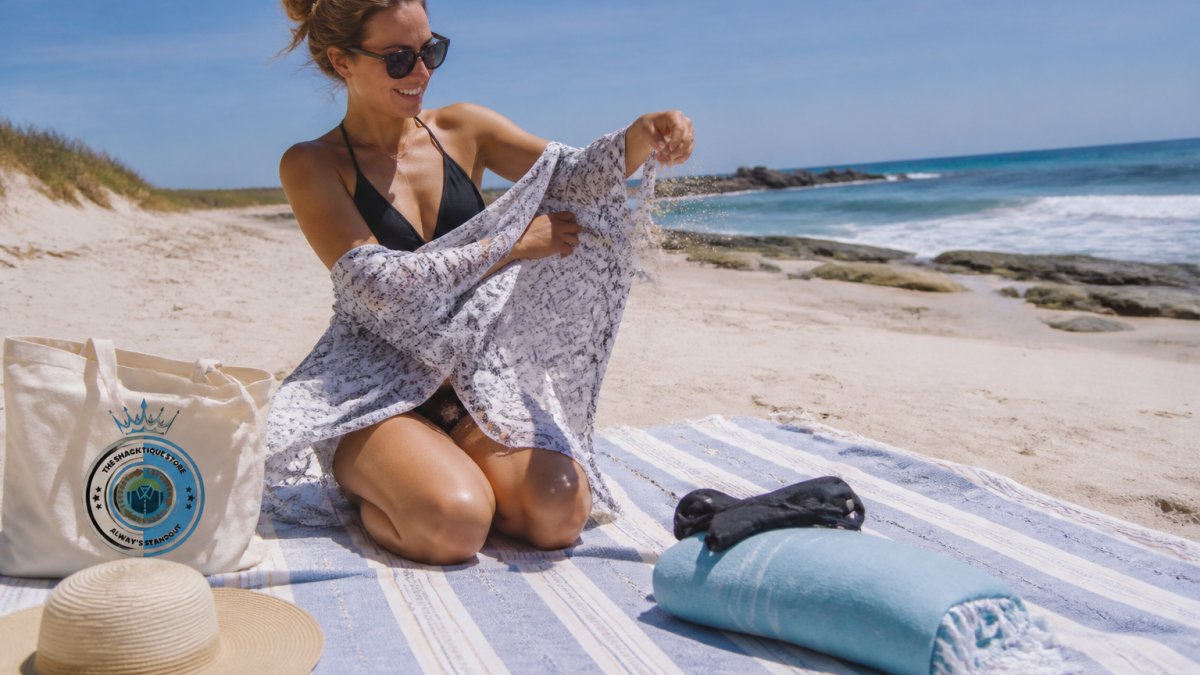
The benefits stack up quickly:
- Lightweight feel: quick-dry pieces stay light even when soaked, so you are not dragging around heavy, waterlogged fabric.
- Compact packing: a quick-dry towel or cover-up folds into a fraction of the space of a cotton towel, freeing up room in your beach bag or suitcase.
- Sand resistance: smooth synthetic surfaces let sand shake off with one flick, so you are not carrying half the beach home.
- Repeated use: because these pieces dry fast, you can wear them again the next day without waiting for a full wash cycle.
If you want specific recommendations, our guide to the 7 best quick dry swimwear for women covers the styles that dry fastest and pack smallest.
The Best Fabric for Swimwear and Beach Clothing
The best fabric for swimwear and beach clothing is a synthetic blend, usually polyester, nylon, or microfibre, because these fibres absorb very little water and release it quickly. But "quick-dry" is not a single property, and the differences between fabrics matter once you are actually wearing them wet.
Here is how the main options compare on the things that affect a beach day:
| Fabric | Water Absorption | Typical Drying Time (line dry, light breeze) | Breathability | Feel When Wet | Best For |
|---|---|---|---|---|---|
| Microfibre | Very low | 15-30 minutes | Moderate | Soft, slightly clingy | Travel towels, cover-ups, beach robes |
| Polyester | Low | 20-40 minutes | Moderate to high (depending on weave) | Light, holds shape | Swimwear, rash guards, boardshorts |
| Nylon | Low | 20-40 minutes | Moderate | Smooth, stretchy | Swimwear, beach robes |
| Cotton | High | 2-4 hours | High when dry, low when wet | Heavy, clings, chafes | Not recommended for water |
Drying times vary with humidity, airflow, and fabric weight, but in general microfibre and fine synthetic knits dry faster than cotton.
Why microfibre punches above its weight. Microfibre filaments are far finer than a human hair, so a small towel or cover-up packs a huge surface area into a light piece of fabric.
Why polyester and nylon dominate swimwear. Both hold their shape when wet, resist stretching, and dry fast enough that a swimsuit is ready to wear again the next morning. Polyester tends to be more UV-stable and cheaper; nylon tends to feel smoother and stretchier. Neither is inherently "better", the weave and finish matter more than the fibre name on the label.
The trap with cheap synthetics. Not all quick-dry fabrics are equal. Loosely knit cheap polyester can feel scratchy, trap odour in the fibre, and pill after a few washes. Quality blends are denser, softer against skin, and finished to wick moisture rather than simply repel it.
What about blends? Many of the best beach pieces mix fibres, polyester with a little elastane for stretch, or nylon with microfibre panels for softness. Blends let a garment dry fast in the body while staying comfortable where it touches skin.
How to Care for Swimwear So It Lasts More Than One Summer
Caring for quick-dry swimwear is straightforward, but a few habits make a big difference to how long it lasts.
- Rinse after every swim. Salt, chlorine, and sunscreen break down elastic fibres over time. A quick cold rinse after each use removes most of the damage.
- Hand wash in cold water. Hot water and harsh detergents wear out stretch and colour. Use a gentle detergent and skip the fabric softener.
- Air dry in the shade. Quick-dry fabrics dry fast on their own. Direct sun fades colour, so hang pieces in a shaded, breezy spot.
- Avoid the tumble dryer. Heat damages elastic and can shrink synthetic blends. Line drying keeps the fit intact.
- Store dry. Never pack damp swimwear into a bag. Even quick-dry fabric left damp can develop odour and mildew.
Follow these steps and a good piece will hold its shape, colour, and softness through repeated use, not just one season.
What to Wear After Swimming: Comfort, Skin and Odour Control
What you wear after swimming matters for comfort and skin health. Damp fabric against the skin traps moisture, softens the outer layer of skin, and creates friction, which is why wet cotton chafes far more than dry cotton ever does.
Change out of wet swimwear promptly. A common pattern is to linger in a wet swimsuit for an hour or more after a swim. That is when chafing, irritation, and the musty smell set in.
Chafing and irritation, the practical fixes. Friction hotspots tend to appear where seams, sand, and damp fabric meet: underarms, inner thighs, and the waistband. Quick-dry fabrics help because they release moisture instead of holding it, but fit matters too.
Odour control is a moisture story. Odour-causing bacteria thrive in damp, warm fabric. Because quick-dry fabrics release moisture quickly, they do not sit damp and develop that musty towel smell.
Skin comfort without overclaiming. Quick-dry clothing is not a medical product, and it will not prevent sunburn or skin conditions on its own.
Care limitations worth knowing. Quick-dry fabrics are not indestructible. Heat can damage elastic and shrink synthetic blends, so skipping the tumble dryer and washing in cold water is a sensible habit.
For your feet, comfortable footwear matters just as much after a swim. Our guide on how to choose comfortable slides for all day wear covers what to look for in post-swim footwear that stays comfortable from the beach to the shops.
Building Your Beach Wardrobe at The Shacktique
A well-chosen beach wardrobe starts with fabrics that work with you, not against you. Quick-dry swimwear, a compact travel towel, a lightweight cover-up, and comfortable slides cover most beach days and transition easily into casual weekend wear.
At The Shacktique, our coastal-inspired range is built around exactly that idea. Our quick-dry swimwear options are designed to dry fast, our UV400-protected sunglasses are designed to shield your eyes from harsh glare, and our lightweight slides are designed to keep your feet comfortable after a swim. Every piece is designed to move from the sand to your everyday plans without looking out of place.
Free shipping applies on orders over $75, so you can build a full beach kit without watching the total climb.
Frequently Asked Questions
What are the benefits of quick dry beach clothing?
Quick dry beach clothing dries in a fraction of the time of heavy cotton, so you are not sitting in damp fabric after a swim. It is lightweight and packs down small, resists sand so you can shake it clean, and reduces the damp-towel smell that builds up in a beach bag. Fabrics like microfiber and polyester also feel softer against skin and stay comfortable for repeated use across a long beach day.
How long does quick-dry swimwear take to dry?
Quick-dry swimwear made from microfiber or thin polyester blends generally dries much faster than cotton in warm sun and light breeze. Thicker lined pieces take longer, so hang them in airflow rather than folding them damp. A quick rinse in fresh water after swimming helps the fabric dry faster and keeps it free of salt and chlorine residue.
Can you wear quick-dry swimwear away from the beach?
Yes. Many quick-dry pieces are designed to transition from water to casual outings, so a cover-up or swim top can work with shorts or a skirt for a relaxed look. Choose neutral coastal colours and simple cuts if you want versatility. This makes quick dry beach clothing a practical choice for people who are not at the beach every weekend but still want pieces that work casually.
How should you wash and care for quick-dry swimwear?
Rinse in cool fresh water after every swim to remove salt and chlorine, then hand wash with a mild detergent. Avoid hot water, bleach and fabric softener, which break down stretch fibres and reduce absorbency. Dry flat or hang in shade rather than in direct sun, and never tumble dry. Following these care instructions keeps the fabric soft, the fit intact and the drying performance consistent wash after wash.
The challenge is simple: stop letting heavy, damp cotton dictate your beach day. Choose fabrics that dry fast, feel light, and stay fresh through repeated use. Get started with The Shacktique and build a beach wardrobe that works as hard as your summer does.
